

Clogged dryer vents are a leading cause of house fires in the United States, yet they are often the most overlooked appliance maintenance task. For homeowners in Denver, where the climate is already high-altitude and bone-dry, paying attention to these dryer vent dangers is imperative. A small maintenance oversight can turn into a serious hazard.
You may be meticulous about cleaning the lint trap after every load, but the lint that bypasses the filter builds up in the hidden vent system. This buildup is essentially highly combustible fuel, and when combined with the excessive heat generated by an obstructed dryer, it creates a recipe for disaster.
According to the U.S. Fire Administration, over 2,900 residential dryer fires are reported annually, with failure to clean being the leading cause.
This article will explain the major hidden dangers, reveal the clear warning signs that your vent needs professional attention, and clarify the difference between dryer vent cleaning and our air duct cleaning service. Protecting your family, saving money, and increasing appliance lifespan all start with one easy cleaning.
The Three Major Dryer Vent Dangers You May Not Know
When your dryer vent is clogged, your appliance can no longer efficiently expel hot, moist air. This inefficiency quickly spirals into three critical problems for your home and family.
1. The Critical Fire Hazard
Lint is composed of small, highly flammable fibers. When the vent system becomes clogged, the hot air produced by your dryer cannot escape. This trapped heat causes the temperature inside the appliance and the surrounding vent to climb to dangerously high levels.
The heating element of your dryer is forced to run continuously, and it takes very little heat to ignite the trapped lint. In Denver’s dry atmosphere, once the lint ignites, the fire can spread rapidly into the walls of your home via the vent line. This risk increases dramatically for vents that are long, have multiple turns, or are located on the roof.
2. The Invisible Threat: Carbon Monoxide (CO) Poisoning
If you own a gas-powered dryer, a clogged vent poses an even greater risk. Gas dryers vent both hot air and combustion byproducts, including deadly carbon monoxide (CO).
When the exhaust vent is blocked, the CO cannot be safely expelled outside. Instead, this odorless, colorless gas backs up into the dryer drum and leaks into your laundry room and home. In high concentrations, carbon monoxide is lethal, making regular dryer vent cleaning a life-saving maintenance step, not just a convenience.
3. Wasted Energy and Appliance Damage
A less dangerous, but equally costly, consequence of a clogged vent is reduced efficiency.
- Higher Energy Bills: A clogged vent forces your dryer to work harder and run longer—often requiring multiple cycles to dry a single load. This dramatically increases your energy consumption and drives up your utility bills.
- Appliance Wear and Tear: The continuous strain and overheating put stress on the dryer’s motor and heating element, leading to premature breakdowns, expensive repairs, and a shortened appliance lifespan.
5 Warning Signs Your Dryer Vent Needs Immediate Cleaning
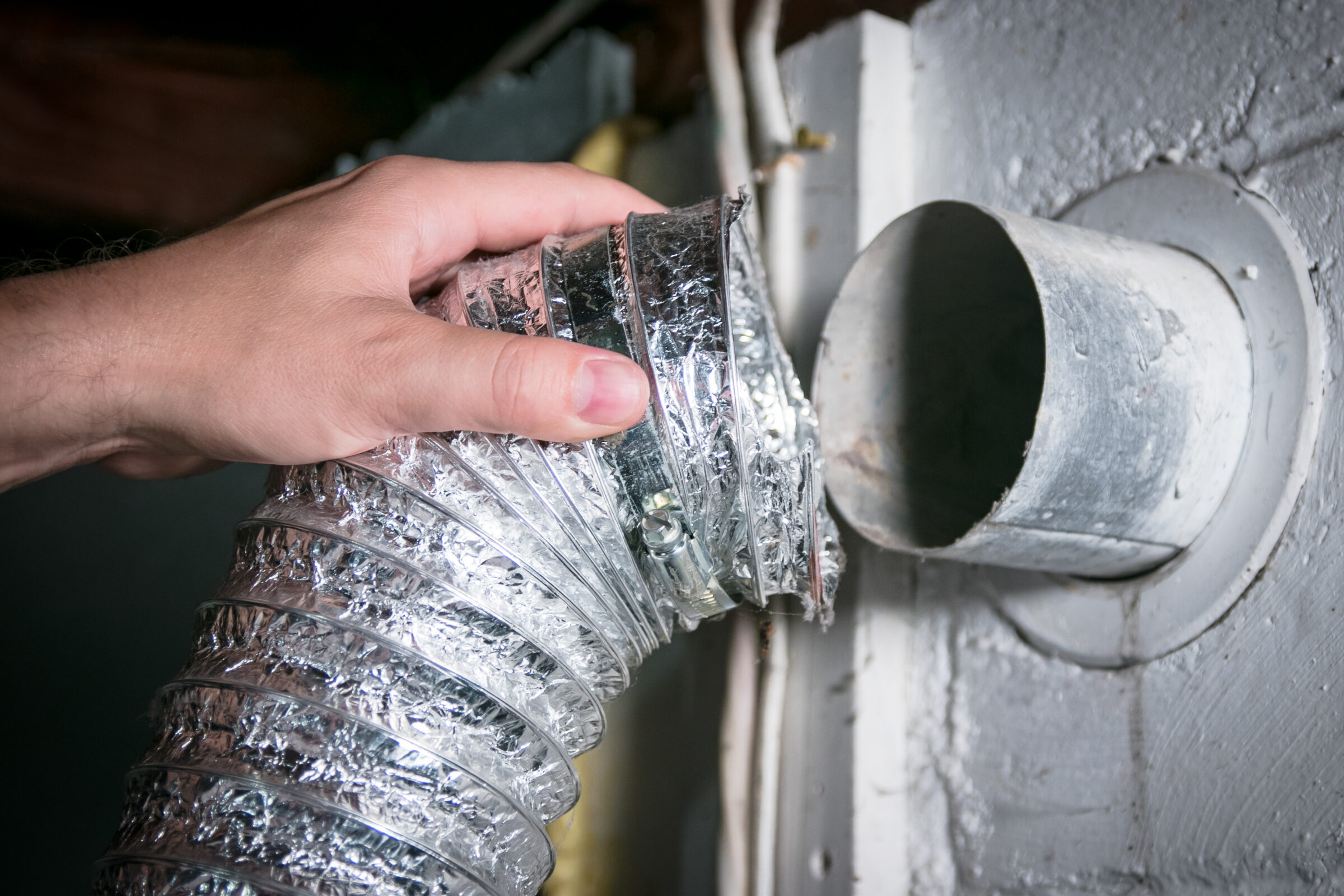
Your dryer will usually give you clear signs that it is struggling long before a dangerous situation occurs. Pay close attention to these common symptoms, as they are your first alert to potential dryer vent dangers:
- Drying Takes Too Long: This is the most common sign. If a normal load takes two or more cycles to dry completely, especially heavy items like towels or jeans, the airflow is restricted.
- Excessive Heat: The clothing, the top of the dryer, or the laundry room itself feels unusually hot. The heat is backing up because it has nowhere to go.
- Burning Smell: If you notice a faint, acrid odor, immediately stop the dryer. This often means lint is starting to burn on the heating element—this is an emergency warning sign.
- Excess Lint on Clothing: If you are seeing more lint than usual on your clothes after the cycle is finished, the exhaust flow is backing up into the drum.
- Lack of Vent Flap Movement: Go outside and check the exterior vent cap while the dryer is running. If the external flap is not opening or there is no strong air coming out, you have a serious blockage.
Dryer Vent Cleaning vs. Air Duct Cleaning: What’s the Difference?
Many Denver homeowners hear the word “vent” and assume these two services are the same, but they address entirely different systems and entirely different hazards.
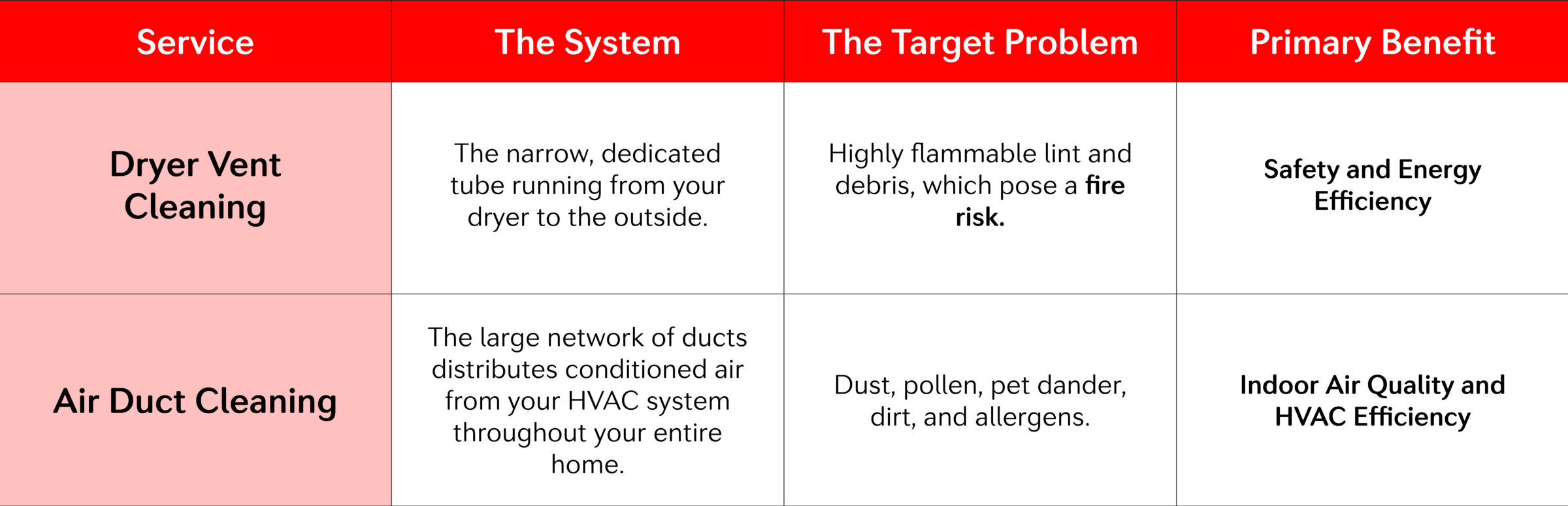
While both are essential home services that Mile Hi Services provides, they use different tools and serve different purposes. We recommend pairing your air duct cleaning with a dryer vent cleaning to ensure both maximum air quality and maximum safety. Learn more about our comprehensive air duct cleaning process.
The Professional Difference: Why DIY Isn’t Enough
While you should always clean your lint trap after every load, the clogs that cause fires are often deep inside the walls or where the vent line makes a sharp turn. This is where the true dryer vent dangers hide.
Professional technicians use specialized equipment—including high-powered vacuums, spinning brushes, and compressed air tools—to remove all lint from the entire length of the line, guaranteeing the vent is completely clear from the dryer connection to the exterior cap. With a fire hazard, you can’t afford to miss a single clump of lint.
Keep Your Family, Pets, and Home Safe
Protecting your home and family goes beyond just having a beautiful lawn. A clean dryer vent is not just about faster-drying laundry; it’s about fire safety, carbon monoxide prevention, and energy efficiency.
Don’t take chances with a hidden hazard that is so easily remedied. Schedule your professional dryer vent cleaning service today with Mile Hi Services and ensure the safety and efficiency of your Denver home. Contact us.