

Taking care of your home in a place like Denver means preparing for the cold. You know the drill: the seasons shift fast, and those beautiful fall days can quickly turn into freezing nights. A huge part of that preparation, one that saves homeowners time, stress, and money, is winterizing your lawn sprinkler system.
You might be wondering, “Do I really need a sprinkler blowout?” The short answer is yes, especially if you live in an area that sees freezing temperatures.
Your sprinkler pipes, even those buried in the ground, hold residual water. When water freezes, it expands. That expansion inside a pipe can lead to cracks and ruptures. Come springtime, a damaged system can mean expensive repairs, replacing components, and a big headache. A sprinkler blowout is the process of forcing all the remaining water out of your irrigation lines using a large volume air compressor, preparing it for the cold weather.
The real question, then, is precisely when to do a sprinkler blowout.
The Sweet Spot: Determining When to Do a Sprinkler Blowout
For homeowners in the Denver area, the window for a sprinkler blowout usually falls between late September and early November. This period is often called “blowout season.”
Why this timeframe? To avoid the first hard freeze. A “hard freeze” means temperatures drop low enough for a long enough time to freeze water deep inside the soil and your pipes. While a quick dip below 32 degrees Fahrenheit (freezing) at night might not immediately damage your buried pipes, it’s a warning sign. Once those overnight lows consistently drop, and the ground starts to cool significantly, the risk jumps dramatically.
Many professionals suggest aiming to have the blowout completed by the middle of October. This date gives you a good margin of safety before the weather becomes truly unpredictable.
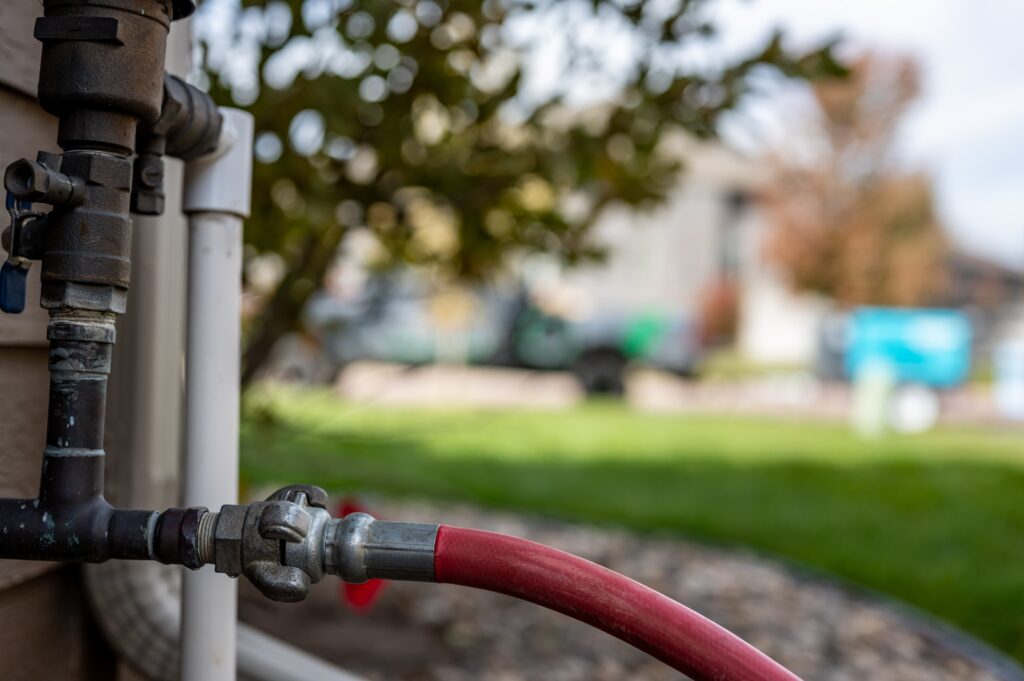
Don’t Wait Until It’s Too Late to Schedule Your Sprinkler Blowout
Knowing when to do a sprinkler blowout is the single most important factor for protecting your system. The biggest mistake people make is waiting until after the first significant freeze has already occurred. By then, it may be too late. Water inside your backflow preventer—the above-ground part of your system—can freeze quickly, as can the water in the shallower parts of your lines.
By scheduling early, you avoid the rush and help ensure your system is protected. Waiting till after the first freeze is generally too late unless you have taken measures to protect your backflow.
Balancing Act: Too Early vs. Too Late
There’s a subtle balance to strike when to do a sprinkler blowout and when deciding the best date.
If you blow out your system too early (say, early September), you might still have a few weeks of dry, warm weather where your lawn and especially your trees and shrubs could use a little more water. If you winterize early, you’ll need to commit to hand-watering those plants until they go dormant. If you wait too late (pushing into mid-November or beyond), you risk an unexpected early cold snap. Colorado weather is known for its sudden shifts, and being caught off-guard can lead to freeze damage, requiring significant repairs before you can use your system again in the spring.
If you wait too late (pushing into mid-November or beyond), you risk an unexpected early cold snap. Colorado weather is known for its sudden shifts, and being caught off-guard can lead to freeze damage, requiring significant repairs before you can use your system again in the spring.
The Role of Your Lawn
Another factor to consider is the natural cycle of your lawn. Most Colorado grass varieties, like Kentucky Bluegrass, will start to transition into dormancy when soil temperatures drop consistently below about 45 degrees Fahrenheit. During the fall, the grass is building up its root system to prepare for winter.
As the weather cools and your lawn goes dormant (often looking uniformly tan or brown), it needs much less water. This natural slowing down of growth signals that it is a safe time to shut off the water supply and schedule that blowout. The timing often lines up with that late September to mid-October window.
Don’t Forget!
Your trees and shrubs play a role, too! Even after you have had your blowout, the dry Colorado winter means that these plants will benefit from hand watering on warmer, sunny days throughout the winter. Make sure your hose is disconnected and drained after each use. A good fall watering right before you turn the system off is always beneficial for root health.
What Happens During a Sprinkler Blowout? A Closer Look
A proper sprinkler blowout is more than just forcing air into the lines. It involves a systematic, careful process to make sure every last drop of water is expelled without causing harm to the system itself. Understanding this detailed procedure helps illustrate when to do a sprinkler blowout to maximize protection against freezing.
First Step
First, the main water supply to the irrigation system must be shut off completely. This stops any new water from entering the lines while the service is happening. Next, a service provider will connect a specialized, high-volume air compressor to a designated point on your system. This is a crucial step that requires the right equipment; standard home air compressors generally do not have the volume needed to complete the job properly and safely.
Second Step
The technician then works through each watering zone, one at a time. They open a zone, send compressed air through, and watch until a fine mist, or no water at all, comes out of the sprinkler heads. Running the zones in sequence is important to prevent pressure build-up and ensure all the water is cleared. Once a zone is cleared, the technician moves on to the next.
The Results
This meticulous, systematic flushing of water is what prevents the catastrophic damage of frozen pipes. The process is particularly important for the backflow preventer—the device that keeps irrigation water from flowing back into your drinking water supply. This above-ground component is the most susceptible to freezing, and it needs to be drained and insulated after the blowout is completed.
Preparing for the Service
Preparing for the Service While a professional team handles the technical steps, knowing when to do a sprinkler blowout helps you prepare efficiently for the service day. You should know where your main irrigation shut-off valve is located. This is typically a valve inside your basement or garage that controls the water flow just to the sprinkler system. Knowing the location saves time for the service technician.
It is also helpful to clear any debris, such as fallen leaves, from around the backflow device and any accessible sprinkler heads. This preparation helps the professional get right to work and makes for a smooth, efficient service appointment.
Protection Beyond the Blowout
While the sprinkler blowout is the most vital step in winterization, homeowners can take a few extra measures to protect their system further.
- Insulate the Backflow Preventer: Because the backflow assembly is outside and often above ground, it is exposed to the coldest air. After it is drained, covering it with a specialized insulation blanket or a piece of foam insulation can provide an extra layer of defense against deep cold.
- Drain Outdoor Faucets: While not directly part of the main irrigation system, outdoor hose spigots can freeze and burst. Disconnect all garden hoses and allow any remaining water to drain out of the faucets. If you have “frost-free” spigots, removing the hose is usually enough. For older-style faucets, you might need to shut off the indoor water valve leading to the spigot.
- Controller Check: Turn your irrigation controller (the timer box) to the “off” or “rain/winter” setting. This prevents the system from accidentally turning on and attempting to water when the temperatures are already low.
Why Professional Help Matters When Deciding When to Do a Sprinkler Blowout
Professionals, like our team at Mile Hi Services, know two things: when to do a sprinkler blowout, what the correct procedures are for all system types. Remember: doing a sprinkler blowout is a specialized task that is worth leaving to the experts to protect your investment.
To protect your irrigation system and avoid costly repairs next spring, start thinking about when to do a sprinkler blowout as soon as the weather begins to cool. Check the forecast, look for those dropping overnight lows, and get on the schedule.
At Mile Hi Services, we offer professional sprinkler blowouts as one of our essential home maintenance services. We understand the specific climate needs of Denver and help you prepare your system properly so you can relax when winter arrives.
Ready to schedule yours? Reach out to